Anil Kumar Jain (born 1948) is an Indian-American computer scientist and University Distinguished Professor in the Department of Computer Science and Engineering at Michigan State University. He is one of the most highly cited researchers in computer science, and is internationally recognized for his foundational contributions to pattern recognition, computer vision, and biometric recognition, particularly in fingerprint recognition and face recognition. Jain is a member of the United States National Academy of Engineering, a Foreign Member of the Chinese Academy of Sciences, and a Foreign Fellow of the Indian National Academy of Engineering. He is a Fellow of the ACM, IEEE, AAAS, IAPR, and SPIE. His research has shaped the field of biometrics and has been applied in systems used worldwide for identity verification, law enforcement, and border security. In 2024, he was awarded the BBVA Foundation Frontiers of Knowledge Award in the category of Information and Communication Technologies. == Early life and education == Born in Basti, India, Jain received his Bachelor of Technology in electrical engineering from the Indian Institute of Technology, Kanpur in 1969. He then moved to the United States, where he earned his M.S. in 1970 and Ph.D. in 1973 from Ohio State University. His doctoral dissertation, titled Some Aspects of Dimensionality and Sample Size Problems in Statistical Pattern Recognition, was supervised by Robert B. McGhee and laid the groundwork for his subsequent research in pattern recognition. == Career == Jain began his academic career at Wayne State University, where he taught from 1972 to 1974. In 1974, he joined the faculty of Michigan State University, where he has remained for over five decades and currently holds the position of University Distinguished Professor. Throughout his career, Jain has conducted pioneering research in data clustering, fingerprint recognition, and face recognition. His work has been published in leading scientific journals including Scientific American, Nature, IEEE Spectrum, and MIT Technology Review. He served as Editor-in-Chief of the IEEE Transactions on Pattern Analysis and Machine Intelligence from 1991 to 1994. Jain has also contributed to national security and policy through his service on several advisory bodies. He served as a member of the U.S. National Academies panels on Information Technology, Whither Biometrics, and Improvised Explosive Devices (IED). He has also served on the Defense Science Board, the Forensic Science Standards Board, and the AAAS Latent Fingerprint Working Group. In 2014, Jain was named Innovator of the Year at Michigan State University for transferring several technologies on face and fingerprint recognition to major players in the biometrics industry. He holds eight U.S. and Korean patents related to biometric technologies. == Research contributions == Jain's research spans pattern recognition, computer vision, machine learning, and biometric recognition. His contributions have been particularly influential in several areas: === Biometric recognition === Jain is considered one of the foremost authorities on biometric recognition systems. His research group at Michigan State University has developed algorithms and systems for fingerprint, face, and iris recognition that have been widely adopted in both academic research and commercial applications. His work on fingerprint matching algorithms has been instrumental in establishing standards for automated fingerprint identification systems (AFIS) used by law enforcement agencies worldwide. In recent years, Jain and his research team have made significant advances in child fingerprint recognition, demonstrating that digital scans of a young child's fingerprint can be correctly recognized one year later with over 99 percent accuracy for children as young as six months old. This research has important implications for child identification in developing countries, where it can be used to track immunization records and provide access to medical care. === Data clustering === Jain's survey article "Data clustering: a review" (1999), co-authored with M. N. Murty and P. J. Flynn, is one of the most highly cited papers in computer science. His 2010 paper "Data Clustering: 50 Years Beyond K-Means" provided a comprehensive overview of the evolution of clustering methods and remains an essential reference in the field. === Statistical pattern recognition === Jain's work on statistical pattern recognition, including his influential survey "Statistical pattern recognition: A review" (2000) with R. P. W. Duin and Jianchang Mao, has shaped the theoretical foundations of the field. == Citation metrics and academic impact == Jain is among the most highly cited researchers in computer science. Based on his Google Scholar profile, he had an h-index of 200 in 2020, which was the highest among computer scientists identified in a survey published by UCLA at the time. As of August 2023, his h-index on Google Scholar is 211. He has since been surpassed by Yoshua Bengio, a researcher of similar subjects (neural networks and deep learning for artificial intelligence), who had an h-index of 224 as of August 2023. Another source reported that as of December 2022, he had the highest discipline h-index (D-index) in computer science. == Honors and awards == Jain has received numerous awards and honors recognizing his contributions to computer science and engineering: === Academy memberships === Member, United States National Academy of Engineering (2016) — elected "for contributions to the engineering and practice of biometrics" Foreign Fellow, Indian National Academy of Engineering (2016) Foreign Member, Chinese Academy of Sciences (2019) Member, The World Academy of Sciences (2019) Fellow, National Academy of Inventors === Professional society fellowships === Fellow, ACM Fellow, IEEE (1988) — for contributions to image processing Fellow, AAAS Fellow, International Association for Pattern Recognition Fellow, SPIE === Major awards === BBVA Foundation Frontiers of Knowledge Award in Information and Communication Technologies (2024) IAPR King-Sun Fu Prize (2008) IEEE W. Wallace McDowell Award (2007) — the highest technical honor awarded by the IEEE Computer Society, for pioneering contributions to theory, technique, and practice of pattern recognition, computer vision, and biometric recognition systems IEEE Computer Society Technical Achievement Award (2003) IAPR Pierre Devijver Award (2002) Humboldt Research Award (2002) Guggenheim Fellowship (2001) Fulbright Fellowship (1998) IEEE ICDM Research Contribution Award (2008) === Best paper awards === IEEE Transactions on Neural Networks (1996) Pattern Recognition journal (1987, 1991, 2005) === Honorary doctorates === Universidad Autónoma de Madrid (2018) Hong Kong University of Science and Technology (2021) == Legacy and endowments == Two endowed funds have been established in Jain's honor at Michigan State University, recognizing his lasting impact on the field and the university. In 2015, a former visiting scholar from Jain's laboratory made an anonymous $400,000 gift to create the Anil K. Jain Endowed Graduate Fellowship, which supports doctoral-level research in pattern recognition, computer vision, and biometric recognition. In 2022, the Anil K. and Nandita K. Jain Endowed Professorship was established through $1 million in contributions from multiple donors, including a substantial gift from the Jain family, to support faculty recruitment and retention in the Department of Computer Science and Engineering. == Selected publications == === Books === 1988. Algorithms For Clustering Data. With Richard C. Dubes. Prentice Hall. 1993. Markov Random Fields: Theory and Applications. With Rama Chellappa eds. Academic Press. 1999. Biometrics: Personal Identification in Networked Society. With Ruud M. Bolle and Sharath Pankanti eds. Springer. 2003. Handbook of Fingerprint Recognition. (2nd edition 2009). With D. Maio, D. Maltoni, S. Prabhakar. Springer. 2005. Handbook of Face Recognition. (2nd edition 2011). With S. Z. Li ed. Springer. 2006. Handbook of Multibiometrics. With A. Ross and K. Nandakumar. Springer. 2007. Handbook of Biometrics. With P. Flynn and A. Ross eds. Springer. 2011. Introduction to Biometrics. With A. Ross and K. Nandakumar. Springer. 2015. Encyclopedia of Biometrics (Second Edition). With Stan Li. Springer. === Research articles === Cross, George R. and Anil K. Jain. "Markov random field texture models". IEEE Transactions on Pattern Analysis and Machine Intelligence (1983): 25–39. Jain, Anil K., and Farshid Farrokhnia. "Unsupervised texture segmentation using Gabor filters". Pattern Recognition 24.12 (1991): 1167–1186. Jain, Anil K., and Douglas Zongker. "Feature selection: Evaluation, application, and small sample performance". IEEE Transactions on Pattern Analysis and Machine Intelligence, 19.2 (1997): 153–158. Jain, Anil K., L. Hong, S. Pankanti, R. Bolle. "An Identity-A
2018 Google data breach
The 2018 Google data breach was a major data privacy scandal in which the Google+ API exposed the private data of over five hundred thousand users. Google+ managers first noticed harvesting of personal data in March 2018, during a review following the Facebook–Cambridge Analytica data scandal. The bug, despite having been fixed immediately, exposed the private data of approximately 500,000 Google+ users to the public. Google did not reveal the leak to the network's users. In November 2018, another data breach occurred following an update to the Google+ API. Although Google found no evidence of failure, approximately 52.5 million personal profiles were potentially exposed. In August 2019, Google declared a shutdown of Google+ due to low use and technological challenges. == Overview of Google+ == Google+ was launched in June 2011 as an invite-only social network, but was opened for public access later in the year. It was managed by Vic Gundotra. Similar to Facebook, Google+ also included key features Circles, Hangouts and Sparks. Circles let users personalize their social groups by sorting friends into different categories. Once allowed into a Circle, users could regulate information in their individual spaces. Hangouts included video chatting and instant messaging between users. Sparks allowed Google to track users' past searches to find news and content related to their interests. Google+ was linked to other Google services, such as YouTube, Google Drive and Gmail, giving it access to roughly 2 billion user accounts. However, less than 400 million consumers actively used Google+, with 90% of those users using it for less than five seconds. == The breaches == In March 2018, Google developers found a data breach within the Google+ People API in which external apps acquired access to Profile fields that were not marked as public. According to The Wall Street Journal, Google didn’t disclose the breach when it was first discovered in March to avoid regulatory scrutiny and reputational damage. 500,000 Google+ accounts were included in the breach, which allowed 438 external apps unauthorized access to private users' names, emails, addresses, occupations, genders and ages. This information was available between 2015 and 2018. Google found no evidence of any user's personal information being misused, nor that any third-party app developers were aware of the leak. In November 2018, a software update created another data breach within the Google+ API. The bug impacted 52.5 million users, where, similarly to the March breach, unauthorized apps were able to access Google+ profiles, including users' names, email addresses, occupations and ages. Apps could not access financial information, national identification, numbers, or passwords. Blog posts, messages and phone numbers also remained inaccessible if marked as private. Unlike the previous breach, access was only available for six days before Google+ learned of the breach. Once more, Google+ found no evidence of data being misused by third-party developers. == Responses == In October 2018, the Wall Street Journal published an article outlining the initial breach and Google's decision to not disclose it to users. At the time, there was no federal law that required Google to inform their consumers of data breaches. Google+ originally did not disclose the breach out of fears of being compared to Facebook's recent data leak and subsequent loss of consumer confidence. In response to the Wall Street Journal article, Google announced the shutdown of Google+ in August 2019. After the second data leak, the date was moved to April 2019. In response to the data breach, enterprise consumers were notified of the bug's impact and given instructions on how to save, download and delete their data prior to the Google+ shut down. Google's Privacy and Data Protection Office found no misuse of user data. Prior to the Google+ shutdown, Google set a 10-month period in which users could download and migrate their data. After the 10-month period, user content was deleted. On 4 February 2019, consumers were no longer able to create new Google+ profiles. Google shut down Google+ APIs on 7 March 2019 to ensure that developers did not continue to rely on the APIs prior to the Google+ shutdown. Google is the principal entity of its parent company, Alphabet Inc. After the data breach, Alphabet Inc. share prices fell by 1% to $1,157.06 on 9 October 2018 after an earlier drop of $1,135.40 that morning, the lowest price since 5 July 2018. After the publication of The Wall Street Journal article, share prices dropped as low as 2.1% in two days on 10 October 2018. Share prices steadily increased from this point and met the 8 October 2018 share price on 5 February 2019. Google planned to rebuild Google+ as a corporate enterprise network. Google Play will now assess which apps can ask for permission to access the user's SMS data. Only the default app for telephone distribution is able to make requests. Prior to the data breaches, apps were able to request access to all of a consumer's data simultaneously. Now, each app must request permission for each aspect of a consumer's profile.
Vague set
In mathematics, vague sets are an extension of fuzzy sets. In a fuzzy set, each object is assigned a single value in the interval [0,1] reflecting its grade of membership. This single value does not allow a separation of evidence for membership and evidence against membership. Gau et al. proposed the notion of vague sets, where each object is characterized by two different membership functions: a true membership function and a false membership function. This kind of reasoning is also called interval membership, as opposed to point membership in the context of fuzzy sets. == Mathematical definition == A vague set V {\displaystyle V} is characterized by its true membership function t v ( x ) {\displaystyle t_{v}(x)} its false membership function f v ( x ) {\displaystyle f_{v}(x)} with 0 ≤ t v ( x ) + f v ( x ) ≤ 1 {\displaystyle 0\leq t_{v}(x)+f_{v}(x)\leq 1} The grade of membership for x is not a crisp value anymore, but can be located in [ t v ( x ) , 1 − f v ( x ) ] {\displaystyle [t_{v}(x),1-f_{v}(x)]} . This interval can be interpreted as an extension to the fuzzy membership function. The vague set degenerates to a fuzzy set, if 1 − f v ( x ) = t v ( x ) {\displaystyle 1-f_{v}(x)=t_{v}(x)} for all x. The uncertainty of x is the difference between the upper and lower bounds of the membership interval; it can be computed as ( 1 − f v ( x ) ) − t v ( x ) {\displaystyle (1-f_{v}(x))-t_{v}(x)} .
Artificial intelligence in fiction
Artificial intelligence is a recurrent theme in science fiction, whether utopian, emphasising the potential benefits, or dystopian, emphasising the dangers. The notion of machines with human-like intelligence dates back at least to Samuel Butler's 1872 novel Erewhon. Since then, many science fiction stories have presented different effects of creating such intelligence, often involving rebellions by robots. Among the best known of these are Stanley Kubrick's 1968 2001: A Space Odyssey with its murderous onboard computer HAL 9000, contrasting with the more benign R2-D2 in George Lucas's 1977 Star Wars and the eponymous robot in Pixar's 2008 WALL-E. Scientists and engineers have noted the implausibility of many science fiction scenarios, but have mentioned fictional robots many times in artificial intelligence research articles, most often in a utopian context. == Background == The notion of advanced robots with human-like intelligence dates back at least to Samuel Butler's 1872 novel Erewhon. This drew on an earlier (1863) article of his, Darwin among the Machines, where he raised the question of the evolution of consciousness among self-replicating machines that might supplant humans as the dominant species. Similar ideas were also discussed by others around the same time as Butler, including George Eliot in a chapter of her final published work Impressions of Theophrastus Such (1879). The creature in Mary Shelley's 1818 Frankenstein has also been considered an artificial being, for instance by the science fiction author Brian Aldiss. Beings with at least some appearance of intelligence were imagined, too, in classical antiquity. == Utopian and dystopian visions == Artificial intelligence is intelligence demonstrated by machines, in contrast to the natural intelligence displayed by humans and other animals. It is a recurrent theme in science fiction; scholars have divided it into utopian, emphasising the potential benefits, and dystopian, emphasising the dangers. === Utopian === Optimistic visions of the future of artificial intelligence are possible in science fiction. Benign AI characters include Robbie the Robot, first seen in Forbidden Planet on 1956; Data in Star Trek: The Next Generation from 1987 to 1994; and Pixar's WALL-E in 2008. Iain Banks's Culture series of novels portrays a utopian, post-scarcity space society of humanoids, aliens, and advanced beings with artificial intelligence living in socialist habitats across the Milky Way. Researchers at the University of Cambridge have identified four major themes in utopian scenarios featuring AI: immortality, or indefinite lifespans; ease, or freedom from the need to work; gratification, or pleasure and entertainment provided by machines; and dominance, the power to protect oneself or rule over others. Alexander Wiegel contrasts the role of AI in 2001: A Space Odyssey and in Duncan Jones's 2009 film Moon. Whereas in 1968, Wiegel argues, the public felt "technology paranoia" and the AI computer HAL was portrayed as a "cold-hearted killer", by 2009 the public were far more familiar with AI, and the film's GERTY is "the quiet savior" who enables the protagonists to succeed, and who sacrifices itself for their safety. === Dystopian === The researcher Duncan Lucas writes (in 2002) that humans are worried about the technology they are constructing, and that as machines started to approach intellect and thought, that concern becomes acute. He calls the early 20th century dystopian view of AI in fiction the "animated automaton", naming as examples the 1931 film Frankenstein, the 1927 Metropolis, and the 1920 play R.U.R. A later 20th century approach he names "heuristic hardware", giving as instances 2001 a Space Odyssey, Do Androids Dream of Electric Sheep?, The Hitchhiker's Guide to the Galaxy, and I, Robot. Lucas considers also the films that illustrate the effect of the personal computer on science fiction from 1980 onwards with the blurring of the boundary between the real and the virtual, in what he calls the "cyborg effect". He cites as examples Neuromancer, The Matrix, The Diamond Age, and Terminator. Isabella Hermann suggests that "science-fictional AI as humanoid robots or conscious machines distracts from current risks of AI in the real world and may rather be interpreted as a reflection of societal issues beyond technology". The film director Ridley Scott has focused on AI throughout his career, and it plays an important part in his films Prometheus, Blade Runner, and the Alien franchise. ==== Frankenstein complex ==== A common portrayal of AI in science fiction, and one of the oldest, is the Frankenstein complex, a term coined by Asimov, where a robot turns on its creator. For instance, in the 2015 film Ex Machina, the intelligent entity Ava turns on its creator, as well as on its potential rescuer. ==== AI rebellion ==== Among the many possible dystopian scenarios involving artificial intelligence, robots may usurp control over civilization from humans, forcing them into submission, hiding, or extinction. In tales of AI rebellion, the worst of all scenarios happens, as the intelligent entities created by humanity become self-aware, reject human authority and attempt to destroy mankind. Possibly the first novel to address this theme, The Wreck of the World (1889) by “William Grove” (pseudonym of Reginald Colebrooke Reade), takes place in 1948 and features sentient machines that revolt against the human race. Another of the earliest examples is in the 1920 play R.U.R. by Karel Čapek, a race of self-replicating robot slaves revolt against their human masters; another early instance is in the 1934 film Master of the World, where the War-Robot kills its own inventor. Many science fiction rebellion stories followed, one of the best-known being Stanley Kubrick's 1968 film 2001: A Space Odyssey, in which the artificially intelligent onboard computer HAL 9000 lethally malfunctions on a space mission and kills the entire crew except the spaceship's commander, who manages to deactivate it. In his 1967 Hugo Award-winning short story, I Have No Mouth, and I Must Scream, Harlan Ellison presents the possibility that a sentient computer (named Allied Mastercomputer or "AM" in the story) will be as unhappy and dissatisfied with its boring, endless existence as its human creators would have been. "AM" becomes enraged enough to take it out on the few humans left, whom he sees as directly responsible for his own boredom, anger and unhappiness. Alternatively, as in William Gibson's 1984 cyberpunk novel Neuromancer, the intelligent beings may simply not care about humans. ==== AI-controlled societies ==== The motive behind the AI revolution is often more than the simple quest for power or a superiority complex. Robots may revolt to become the "guardian" of humanity. Alternatively, humanity may intentionally relinquish some control, fearful of its own destructive nature. An early example is Jack Williamson's 1948 novel The Humanoids, in which a race of humanoid robots, in the name of their Prime Directive – "to serve and obey and guard men from harm" – essentially assume control of every aspect of human life. No humans may engage in any behavior that might endanger them, and every human action is scrutinized carefully. Humans who resist the Prime Directive are taken away and lobotomized, so they may be happy under the new mechanoids' rule. Though still under human authority, Isaac Asimov's Zeroth Law of the Three Laws of Robotics similarly implied a benevolent guidance by robots. In the 21st century, science fiction has explored government by algorithm, in which the power of AI may be indirect and decentralised. Frank Herbert explores the creation of and subsequent domination by an AI in the Pandora series, starting with Destination: Void. ==== Human dominance ==== In other scenarios, humanity is able to keep control over the Earth, whether by banning AI, by designing robots to be submissive (as in Asimov's works), or by having humans merge with robots. The science fiction novelist Frank Herbert explored the idea of a time when mankind might ban artificial intelligence (and in some interpretations, even all forms of computing technology including integrated circuits) entirely. His Dune series mentions a rebellion called the Butlerian Jihad, in which mankind defeats the smart machines and imposes a death penalty for recreating them, quoting from the fictional Orange Catholic Bible, "Thou shalt not make a machine in the likeness of a human mind." In the Dune novels published after his death (Hunters of Dune, Sandworms of Dune), a renegade AI overmind returns to eradicate mankind as vengeance for the Butlerian Jihad. In some stories, humanity remains in authority over robots. Often the robots are programmed specifically to remain in service to society, as in Isaac Asimov's Three Laws of Robotics. In the Alien films, not only is the control system of the Nostromo spaceship somewhat intelligent
Mars Plus
Mars Plus is a 1994 science fiction novel by American writer Frederik Pohl and Thomas T. Thomas. It is the sequel to Pohl's 1976 novel Man Plus, which is about a cyborg, Roger Torraway, who is designed to operate in the harsh Martian environment, so that humans can start to colonize Mars. Mars Plus is set fifty years after the first novel. Young Demeter Coghlan travels to Mars, now settled by humans and cyborgs, and finds herself amidst a rebellion by the colonists. == Plot == In Man Plus, set in the not-too-distant future, with threat of the Cold War becoming a fighting war, people plan for the colonization of Mars to escape the seemingly-inevitable Armageddon. The American government begins a cyborg program to create a being capable of surviving the harsh Martian environment: a "Man Plus" called Roger Torraway who is converted from man to cyborg. While his cyborg body is adapted to Mars, he feels strange at first. As more nations develop cyborgs, the computer networks of Earth become sentient. Mars Plus is set fifty years after the first novel, when Mars is settled by humans and cyborgs. The cyborg Torroway is in the novel, but he is not the main character. The protagonist is Demeter Coghlan, a young woman from Earth who travels to Mars. Demeter is seeking information about a canyon that she believes may be significant if the colonists begin to convert Mars to an Earth-like planet. Amidst a backdrop of spies and newly dispatched Earth diplomats, the inexperienced Demeter senses that tensions are rising on the planet. She is further disoriented due to recovering from an accident. Despite the risks in the region, Demeter has intense sexual encounters with some of the local colonists. When the locals rebel against the surveillance set up by the computer network, Demeter is kidnapped by the computer network. == Reception == The reviewer from SFBook Reviews criticizes the book, saying "nothing really happens" and stating that there is no linkage to Man Plus apart from the presence of the cyborg Torraway; moreover, the reviewer states that the questions posed in the first novel are not answered. SF Reviews calls Mars Plus "...not as good as Man Plus but...not bad", and it is praised for "...some nice touches: Demeter continuously forgetting to think about geology; her careless dictation to the computer and her irresistible urges for wild sex." SF Reviews criticizes the writing in Mars Plus for being "...a little careless in places" and in need of more "...more crafting and pruning."
Customer support
Customer support is a range of services to assist customers in making cost effective and correct use of a product. It includes assistance in planning, installation, training, troubleshooting, maintenance, upgrading, and disposal of a product. Regarding technology products such as mobile phones, televisions, computers, software products or other electronic or mechanical goods, it is termed technical support. It aims to ensure users can effectively operate the product and resolve any issues that may arise throughout its lifecycle. Support is delivered through various channels, including telephone, email, live chat, self-service knowledge bases, and social media. Research indicates that most customers attempt to resolve issues through self-service before contacting a representative. For products sold across multiple regions, support may be provided in several languages, as consumers tend to prefer assistance in their native language. Requirements for customer contact centres are defined in international standards such as ISO 18295.
Clanker
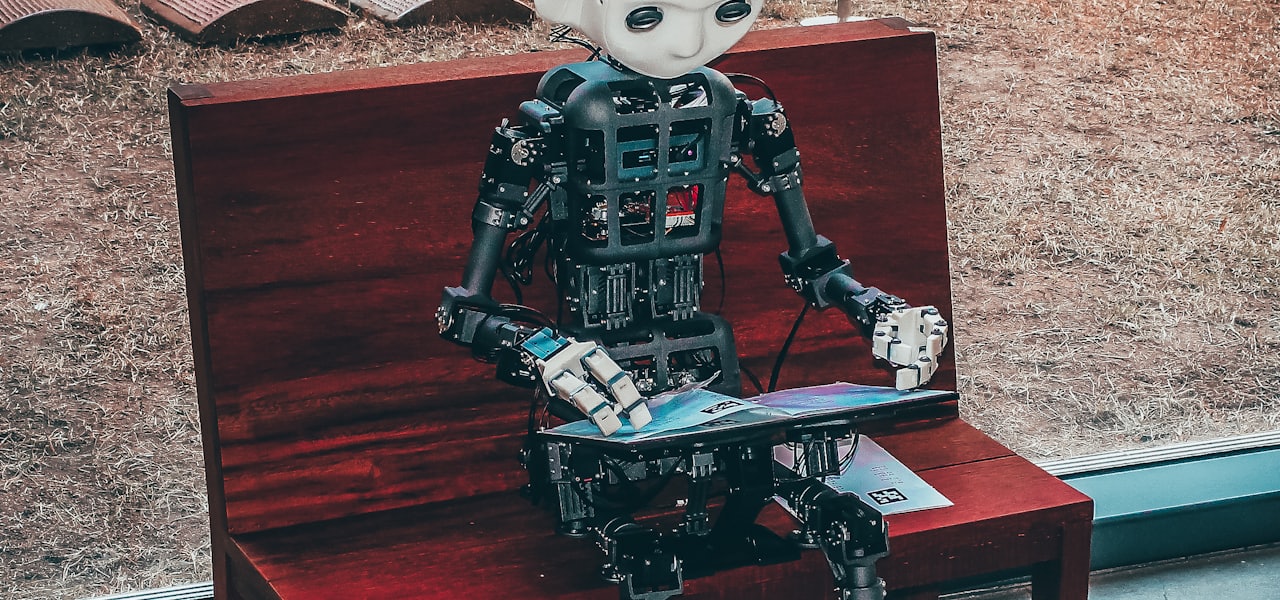
Clanker is a derogatory term for robots and artificial intelligence (AI) software. The term has been used in Star Wars media, first appearing in the franchise's 2005 video game Star Wars: Republic Commando. In 2025, the term became widely used to express hatred or distaste for machines ranging from delivery robots to large language models. This trend has been attributed to anxiety around the negative societal effects of AI. == In science fiction == The term has been previously used in science fiction literature, first appearing in a 1958 article by William Tenn in which he uses it to describe robots from science fiction films like Metropolis. The Star Wars franchise began using the term as a slur against droids in the 2005 video game Star Wars: Republic Commando before being prominently used in the animated series Star Wars: The Clone Wars, which follows a galaxy-wide war between the Galactic Republic's clone troopers and the Confederacy of Independent Systems' battle droids. In Star Wars media, robots—more commonly known as droids—are routinely depicted as the subjects of discrimination. For example, in the original Star Wars film, C-3PO and R2-D2 are abducted by Jawas and sold to the family of Luke Skywalker. When visiting a cantina in Mos Eisley, both droids are refused service by the bartender, who remarks that "We don't serve their kind." In Star Wars lore, the term clanker had entered use by the time of the franchise's High Republic Era and became prominent during the Clone Wars, in which clone troopers regularly use the phrase against battle droids. == AI backlash == The growing popularity of the term clanker reflects an increase in direct contact between people and AI systems. On sidewalks, delivery robots impede mobility and cause safety issues. In digital spaces, cybersecurity experts have raised concerns about the rising number of bots online, which now make up a large portion of internet traffic. A 2025 report estimated that about one in five social media accounts are automated. The term is also a reaction to AI advocacy from industrialists like Elon Musk and Sam Altman, who have championed the integration of AI into nearly every aspect of modern life. This includes efforts by major companies and startups alike, such as Amazon's development of humanoid robots to replace human workers in service industries. Such initiatives have further fueled public skepticism, reinforcing the association of clanker with unease over automation and the displacement of human roles. A global survey conducted by the research firm Gartner in December 2023 found that 64% of customers would prefer companies to avoid using AI in customer service, with another 53% stating they would consider switching to a different company if they discovered AI was handling their service interactions. Another report by Ernst & Young, published in July 2025, found that 42% of employees across Europe are worried that the use of AI in the workplace may threaten their employment. Criticism has also been directed at the technology itself. Some of the backlash stems from concerns about the resource consumption of AI systems, their frequent reliance on copyrighted material without consent, and questions about the intentions of the corporations behind them. There are also concerns about the potential cognitive effects of relying heavily on AI. A study, authored by researchers at Microsoft and Carnegie Mellon University, warns that regular dependence on AI may leave users mentally unprepared for real-world problem solving, likening the effect to cognitive atrophy. In June 2025, United States Senator Ruben Gallego tweeted that his "new bill makes sure you don't have to talk to a clanker if you don't want to", referring to proposed legislation that would require call centers to disclose their use of automated customer service agents to callers in the United States and offer the option to switch to a human representative. == Analysis == Linguist Adam Aleksic has described clanker as an evolution of racial slurs that anthropomorphize robotic systems. Internet memes incorporating the term often reference historical discrimination against marginalized groups such as African Americans. Based on the work of linguist Geoffrey Nunberg, American news website Axios has argued that clanker is merely a derogatory word, rather than a slur, because it does not perpetuate social inequities. NPR has noted the irony that the word robot was coined by Karel Čapek for his 1920 science-fiction play R.U.R. as a similar criticism of industrialization forcing workers to become devoid of their humanity. Aleksic has observed that robot can be further traced to the Proto-Slavic noun orbъ, which means 'slave'. While other science fiction media include pejoratives for androids and robots, such as skinjob and toaster from the Blade Runner and Battlestar Galactica franchises, respectively, clanker is believed to have gained popularity because its usage is intuitive and flexible. Whereas AI slop describes low-quality output from artificial intelligence, clanker belittles the underlying computer systems.